A wood fire is one of the simple pleasures of the colder months, and keeping it that way takes a little care behind the scenes. If you searched for “wood stove repair”, you are probably weighing what your wood stove needs now and what can wait. This page gathers straight answers for homeowners in Abbotsford about wood-burning stove repair: what a technician looks at, what tends to wear out and which small habits keep fires burning cleanly between visits.
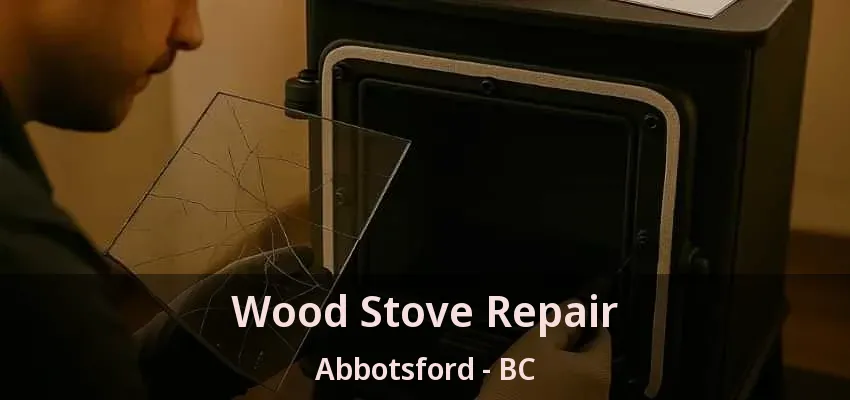
That depends on where the crack is and what the stove is made of. Cracked firebricks, glass and baffles are routine replacements. A crack in a replaceable cast iron panel may be fixable by swapping the panel, if parts are still available. A crack through the main body of a steel or cast iron stove is more serious, since it can leak smoke and air, and repair is often not practical. A technician can assess the crack and tell you honestly whether repair or replacement makes more sense. If you searched for “wood stove repair” after spotting a crack, stop using the stove until it is checked.
Our rule of thumb is to repair what is wearing and replace what is failing. Worn parts are expected after many fires: joints that need repointing, a damper handle that seized, a door rope that no longer seals. Failing parts are another matter. A stove top cracked from overfiring, a prefabricated firebox with burned-through panels and no parts available, or a chimney that needs rebuilding along with the fireplace all push the math toward replacement. Some owners of old masonry fireplaces choose a wood insert instead, which reuses the chimney while giving a tighter, more controllable fire.
The main warning signs are smoke escaping into the room, a fire that is hard to control and visible damage to the stove. Watch for smoke leaking around the door or glass, a door that closes without a snug feel, glass that blackens within a single fire and a fire that keeps roaring even with the air control turned down. Cracked or crumbling firebricks, a warped baffle near the top of the firebox and rusted or loose stovepipe sections are also red flags. Because a leaking stove can release carbon monoxide, keep alarms working and stop using the stove until it is checked.
A stove that burns too hot or too fast is usually getting more air than it should. The common causes are a worn door or glass gasket, a warped door, a damaged air control, a missing or cracked baffle and gaps in the stove body. A very strong chimney draft can add to the problem. Signs include a fire that roars even with the air turned down, glowing parts and wood disappearing much faster than usual. Running a stove this way can warp parts and overheat nearby materials, so a “wood stove repair” check is worth booking before the next long burn.
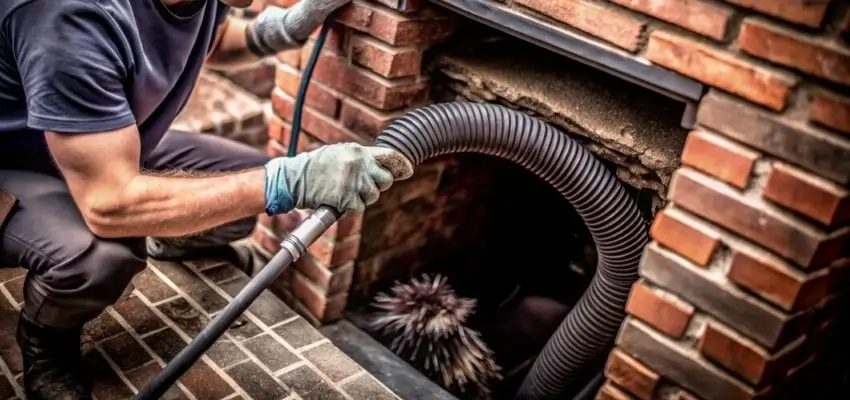
A wood stove is cleaned from the firebox outward, and the stovepipe gets as much attention as the chimney because it often holds more buildup. Elbows and horizontal runs are the usual trouble spots. We clear the ash and open up the firebox, removing the baffle so we can reach the flue collar. Depending on the setup, we brush the pipe in place or take it down, clean it outside and reinstall it with secure joints. The chimney is brushed through its full height. Before leaving, we check the gaskets, firebrick and air controls and wipe the glass so you can see the flames again.
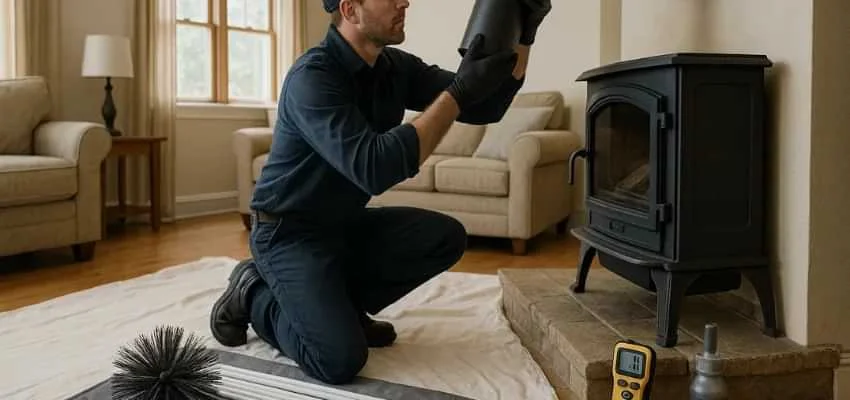
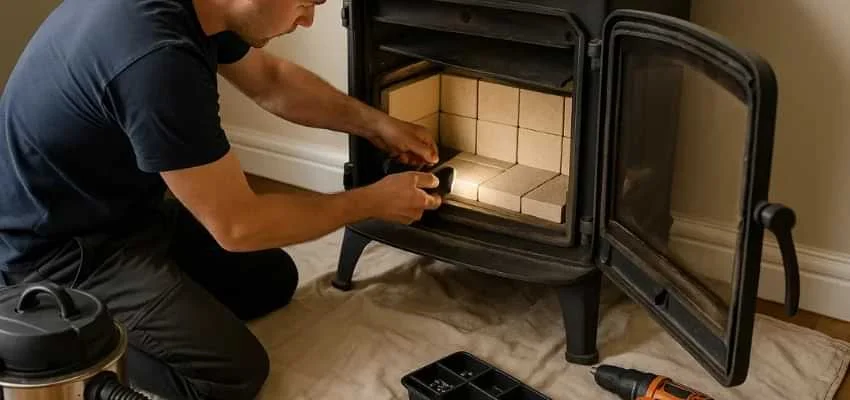
The most common wood stove repairs involve parts designed to wear: door and glass gaskets, firebricks, baffles, glass and stovepipe. Gaskets are fiberglass rope seals that flatten over time and let air leak in, so they are replaced in the correct size with a high-heat cement. Cracked firebricks are swapped out, warped baffles or burn tubes are replaced, and broken glass is replaced with heat-rated ceramic glass, never ordinary window glass. Rusted or loose stovepipe is renewed and secured. Some stoves also have a catalytic combustor that wears out with use and needs replacing to keep burning cleanly.
A common guideline is to have the chimney inspected once a year and swept whenever buildup calls for it, which for many households also works out to about once a year. Homes that burn a fire most evenings through the colder months may need a sweep more often, sometimes partway through the season, while a fireplace used a few times a year may go longer between cleanings. Wood stoves used as a main heat source tend to build up creosote faster. Damp wood, smoldering fires and cold outside chimneys all shorten the interval, so let the yearly check guide the schedule.
Burning dry wood with enough air and keeping an eye on the stove’s condition keep it running well between cleanings. Give each new fire a hot start with the air control open, then turn it down gradually rather than shutting the air right down overnight, which produces more creosote. A stove thermometer on the pipe or top helps you stay out of both the smoldering range and the overfiring range. Empty the ash pan regularly, wipe the glass when it is cool and check that the door still latches firmly. If smoke escapes or the glass blackens quickly, book a check.
Ask for evidence and a written scope, and get a second opinion when the work is large, such as a new liner, major masonry or chimney work, or replacing a stove. The first company should provide photos or camera footage, a plain description of the problem and a list of what will be removed, rebuilt or replaced. A clear quote names the materials, explains how the cause of the damage will be addressed and states what is not included. If two companies disagree, ask each to explain its reasoning; the one that can show you the problem usually deserves more weight.
Some decisions are easier once a person explains them in plain words. A technician from Chimney Sweep Abbotsford can look at your wood stove, point out what matters and skip what does not. Ask for a visit and pick a time that works for your household in Abbotsford.
Flue last swept long ago? Chimney Cleaning in Abbotsford
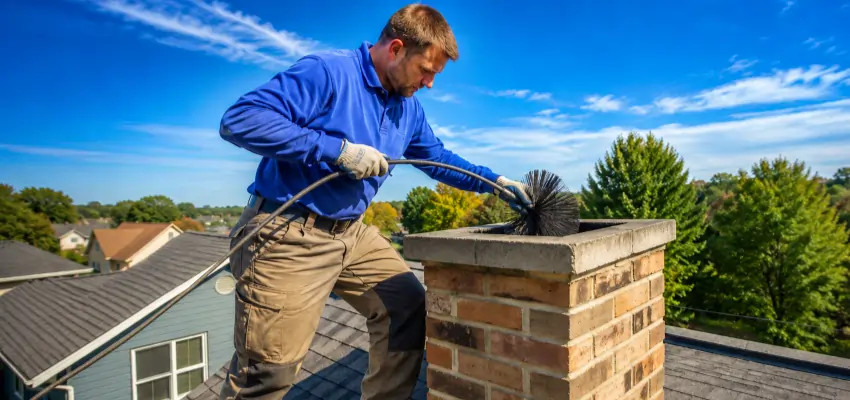
Creosote cleared, flue inspected: Chimney Sweep for Abbotsford
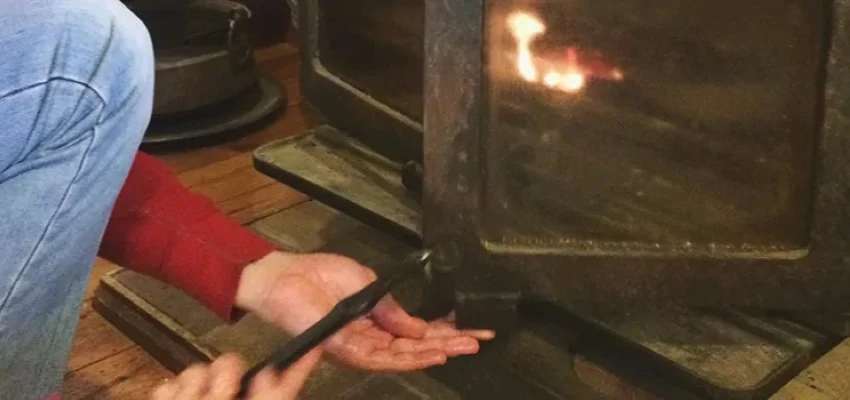
From roof cap to firebox, Chimney Sweep Services in Abbotsford
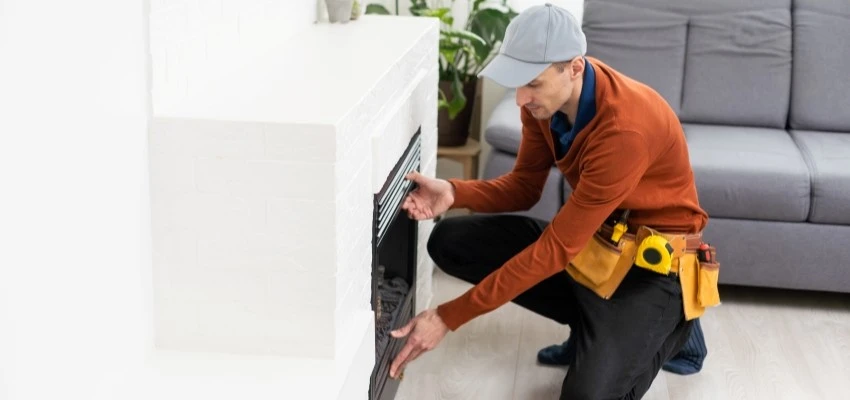
Ready for the season with Fireplace Experts in Abbotsford
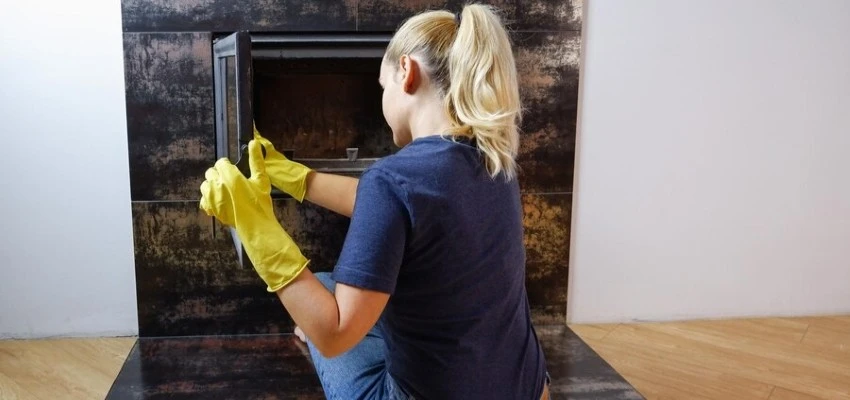
Control area vacuumed during Gas Fireplace Cleaning
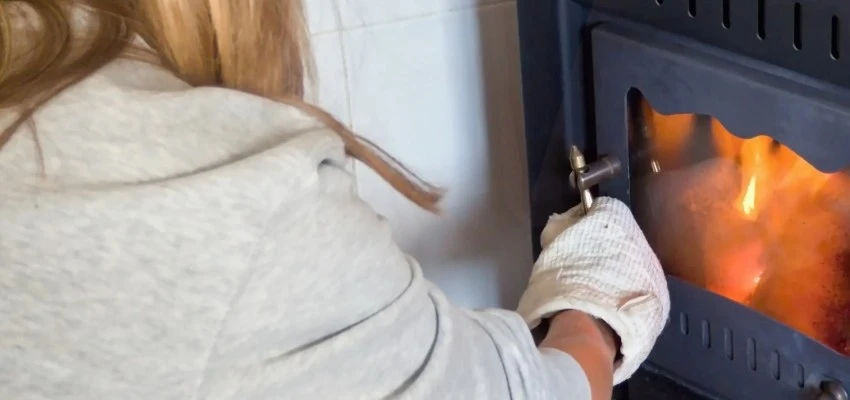
Yearly Gas Fireplace Maintenance in Abbotsford, before the cold arrives